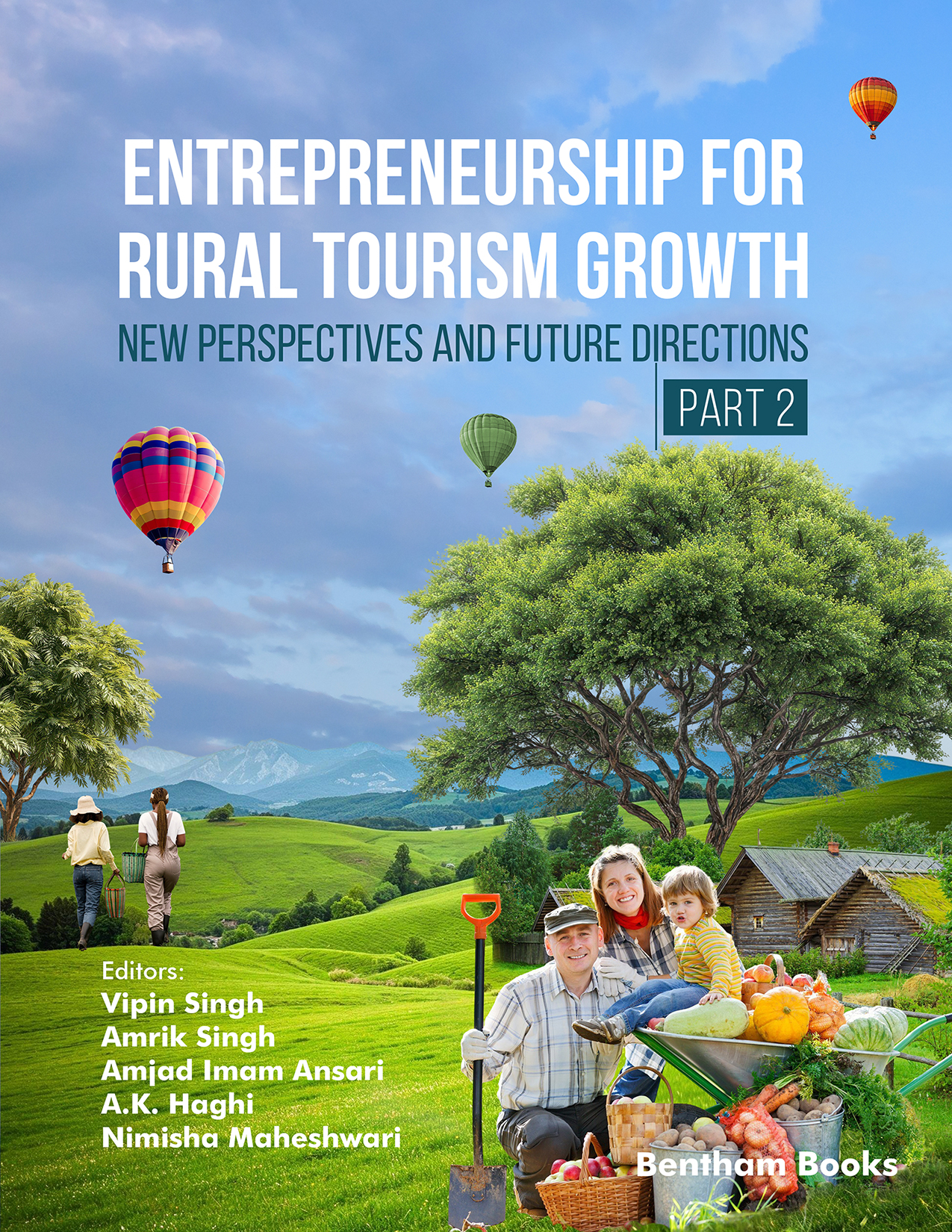
According to the underlying concepts provided in Volume I, Volume II addresses the modern-day challenges and prospects shaping the future of rural tourism development. The chapters in this book have shown how the use of technology innovation, strategic alliances, inclusive leadership, and innovative financing systems can assist rural communities in developing resilient and competitive tourism businesses.
The themes covered in this book include the transformative use of forest farming to shift the community mindset and preserve areas for sustainable development, as well as data-driven methods for identifying market opportunities in the Indian market. The chapters explore advanced uses of technology, such as Geographic Information Systems (GIS), Augmented Reality (AR), and Virtual Reality (VR), and examine how rural destinations can use digital technology to improve visitors' experiences while remaining authentic.
As an essential part of equitable development, the present volume pays considerable attention to the problem of entrepreneurship and leadership development among women in rural tourism communities. Also, modern financing schemes, such as crowdfunding and social impact investing, are discussed as new solutions for financing rural tourism projects in areas where funding is particularly scarce.
A significant emphasis on public-private cooperation has been placed in the collection, using case studies of silk tourism in Ramnagara, Karnataka. These partnerships show how combining government, private sector, and community interests into sustainable tourism enterprises can provide economic benefits while supporting sustainability, cultural heritage, and environmental conservation.
Volume II is aimed at business leaders, opportunity innovators, technology-innovation providers, financial institutions, and communal leaders seeking to understand how modern tools and strategies can help develop rural tourism. The chapters are effectively integrated with theoretical and practical case examples that include not only conceptual frameworks but also operational strategies.
The general message of this book is clear: rural tourism entrepreneurship should be effectively developed by combining innovative ideas with traditions, leveraging technology, and preserving cultural authenticity, while ensuring that the benefits of development are fairly distributed among community members. Rural people should not have to choose between modernization and preservation; instead, they can have both at the same time with the help of strategic entrepreneurship.
Heartfelt thanks to all the authors who represent many faces of rural tourism development across the globe. The expertise in their work, the high level of research, and the desire to achieve sustainable development have enabled the composition of such an exhaustive volume. We believe that the information, practices, and case examples prominently described in these pages shall be invaluable to everyone concerned with advancing rural tourism entrepreneurship and sustainable community development.
Vipin Singh
School of Hotel and Tourism Management
Vellore Institute of Technology
Vellore, Tamil Nadu, India
Amrik Singh
School of Hospitality & Tourism
Lovely Professional University
Phagwara, Punjab, India
Amjad Imam Ansari
Department of Hotel Management & Catering Technology
School of Management and Business Studies
Jamia Hamdard, New Delhi
Delhi, India
A.K. Haghi
Department of Chemistry
University of Coimbra
Coimbra, Portugal
&
Nimisha Maheshwari
Vellore Institute of Technology
Vellore, Tamil Nadu
India