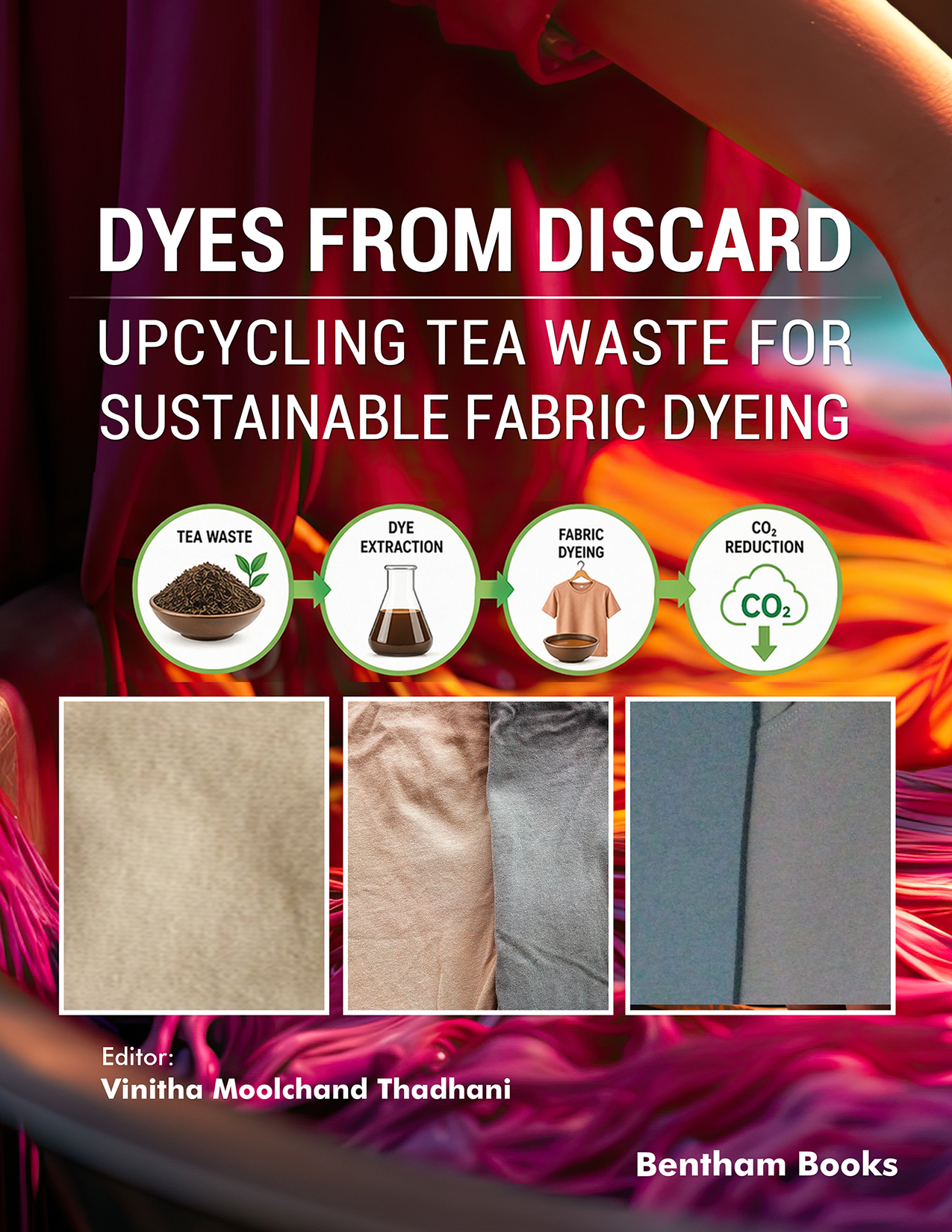
Although textile dyeing is the second-largest polluter of water globally, the market for natural dyes in textiles is growing, driven by increasing consumer demand, environmental and health concerns, and increasingly stringent government regulations associated with synthetic dyes.
Still, the market share of natural dyes is only 5% of that of synthetic dyes. The annual global consumption of synthetic dyes in the textile industry exceeded 650,000 metric tons, while global natural dye consumption annually is only 32,000 metric tons.
Sustainable sourcing, limited availability, and cost, reproducibility of the natural dyeing process, and durability of natural dyes are the primary reasons why the synthetic dye markets still dominate.
Currently, natural indigo, turmeric, and madder are the most frequently used natural dyes in textiles, food, and cosmeceuticals industries. For example, the dry madder stems cost around Rs. 4-7/Kg, but they have only 5-10 % of the active ingredients (pure dye). Incorporating the extraction process cost, the effective cost of madder dye goes up to Rs. 40-140/Kg. Thus, it is challenging to replace the synthetic dyes, which mostly cost under two figures USD per Kg. Considering these factors, natural dyes from waste or industrial by-products are being focused on.
There are ample reports on tea (Camellia sinensis) as a natural fabric dye, and few reports on textile dyes from waste tea. However, most of these studies are specialized studies conducted on a laboratory scale, which may not be sufficient for industrial applications. Thus, tea dye has not paved its way to industrial application, even after being the most consumed beverage after water.
Herein, we discuss how tea dye can be obtained from upscaling waste products of the RTD tea manufacturing process, its chemical composition, and the method of application as an effective fabric dye. We also establish its required fastness properties as a fabric dye. Further methods of obtaining different colours using tea dye and minute amounts of synthetic dyes are also discussed. The lab scale results were upscaled to the sample scale and then finally to the bulk scale in the textile industry.
The idea of using waste from one factory as a raw material for another is a win-win scenario, promoting resource efficiency and circular economy principles. The findings of this research have been implemented by various reputable brands worldwide.
The following is a chapter-by-chapter synopsis of the eight chapters of the book.
Chapter 1: History of Natural Dyes and Their Recent Advances
This chapter examines the history of natural dyes from antiquity to the present. The chapter also discusses how contemporary science has improved the natural dye extraction process and its wide application, and how natural dyes are now a vital element of science, sustainability, and creativity.
Chapter 2: Sources of Natural Dyes
This chapter provides a comprehensive overview of natural dyes, demonstrating how their diverse sources, structures, and applications make them valuable for textiles and a wide range of other applications.
Chapter 3: Natural dyes vs Synthetic dyes: Pros, Cons, and Sustainability
This chapter explains how both types of dyes work, how to use them, and how their color strength, consistency, fastness, and ease of use differ. It also highlights the environmental impact and carbon footprint of both types of dyes. Understanding their benefits and drawbacks can assist us in selecting dyeing methods that are more sustainable and efficient.
Chapter 4: Bio-based textile materials towards Green Chemistry in the Fashion Industry
This chapter highlights how more eco-friendly manufacturing procedures can be developed utilizing green chemistry, bioengineering, new dyeing, and recycling approaches for cost-effective production and for limiting greenhouse gas emissions.
Chapter 5: Valorization of Tea Waste for Sustainable Fabric Dye
This chapter presents a comprehensive study of the innovative process of transforming the tea waste of black, oolong, white, and green leaves into a sustainable fabric dye. Furthermore, the parameters for optimizing the tea extraction process are discussed.
Chapter 6: Method of Application of Waste Tea Dye
The chapter presents a refined approach that integrates the functional properties of tea with traditional dyeing techniques, covering substrate pretreatment, different dyeing methods, and post-treatment.
Chapter 7: A success story of Transforming Ready-to-Drink Tea waste into fabric dye
This study establishes the discarded phenolic fraction of the Ready to Drink (RTD) tea manufacturing process as a fabric dye with the required fastness properties, offering insights for researchers, circular engineers, and industries, and presenting a sustainable alternative method for using waste tea as a dye in the textile sector.
Further, the main challenges of commercial application of natural dyes, namely, supply chain, cost, reproducibility, and consistency, have been overcome by utilizing the waste of the RTD manufacturing plant.
This book is the culmination of all the know-how of using tea waste as a sustainable fabric dye. We hope it will help our readers immensely by disseminating scientific knowledge to them step by step.
We wish to sincerely thank Bentham Publications for providing a platform for the dissemination of the information published in this book to a broad audience. We are also very thankful to every author for their essential contributions that have made our journey worthwhile.
Vinitha Moolchand Thadhani
Ceylon Ayurveda Pvt. Ltd.
Havelock Road, Colombo
Sri Lanka