
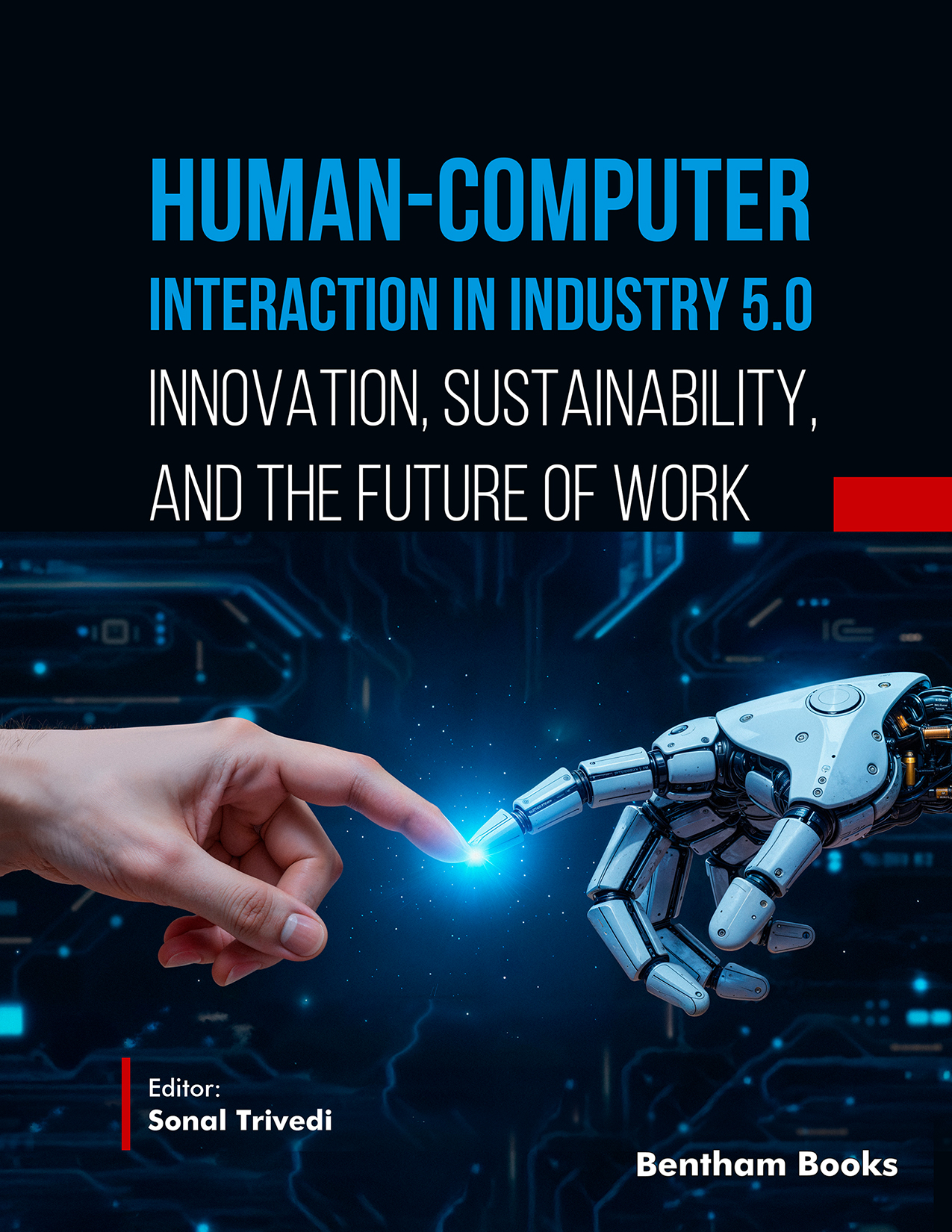
Human-Computer Interaction in Industry 5.0: Innovation, Sustainability, and the Future of Work

Editor: Sonal Trivedi

Human-Computer Interaction in Industry 5.0: Innovation, Sustainability, and the Future of Work

ISBN: 979-8-89881-760-2
eISBN: 979-8-89881-759-6 (Online)

Introduction

Human-Computer Interaction in Industry 5.0: Innovation, Sustainability, and the Future of Work examines the evolving relationship between people and intelligent technologies in the context of Industry 5.0, emphasizing innovation, sustainability and organizational resilience. Drawing on conceptual analyses, systematic reviews and practical perspectives, the book explores how emerging digital technologies can support human-centric workplaces, sustainable business practices and adaptive organizational strategies.

The chapters examine unified communication technologies, artificial intelligence, the Internet of Things, big data, machine learning and blockchain, alongside their applications in business transformation and sustainable development. Additional topics covered in this book include service flexibility, marketing strategies, green innovation in higher education, sustainable banking, innovation management in volatile environments and leadership for risk management in a VUCA world. Together, these contributions provide a multidisciplinary perspective on the technological, managerial and strategic dimensions of Industry 5.0.


Key Features

  • - Human-centric technologies in Industry 5.0.
  • - AI, IoT, big data, blockchain and unified communication.
  • - Sustainability, green innovation and digital transformation.
  • - Service flexibility, innovation management and strategic marketing.
  • - Leadership and risk management in VUCA environments

Target Readership:

This monograph is a valuable resource for researchers, graduate students, policymakers and professionals working in management, information technology, digital innovation and sustainable development.

Contributors

Editor(s):
Sonal Trivedi
School of Business
Manav Rachna University
Faridabad, Haryana
India


Contributor(s):
Anjali Hans
Faculty of Social Science, Arts and Humanities
Lincoln University College
Kota bharu
Malaysia


Anesu Ndoro
Department of Business Management
Midlands State University
Gweru
Zimbabwe


Emmanuel Hans
Faculty of Social Science, Arts and Humanities
Lincoln University College
Kota bharu
Malaysia


Gurpreet Kaur
School of Management & Commerce
Manav Rachna University
Faridabad, Haryana
India


Gurpreet Singh
School of Computer Science and Engineering
Lovely Professional University
Jalandhar, Punjab
India


Kunal Singh
School of Management & Commerce
Manav Rachna University
Faridabad, Haryana
India


Leeroy Murombedzi
Department of Business Management
Midlands State University
Gweru
Zimbabwe


Mamta
Chitkara Institute of Engineering and Technology, Chitkara University
Rajpura, Punjab
India


Mamta Sharma
Department of Business Administration
Chandigarh Engineering College (CEC)
Mohali, Punjab
India


Mohd Afjal
College of Economics and Management
Al Qasimia University
Sharjah
UAE


Mufaro Dzingirai
Harold Pupkewitz Graduate School of Business, Namibia University of Science and Technology
Windhoek
Namibia


Neha Kamboj
School of Management
IILM University
Gurugram, Haryana
India


Payal Sanan
Prin. L. N. Welingkar Institute of Management Development & Research (PGDM)
Mumbai, Maharashtra
India


Robin Atwal
Chitkara Business School, Chitkara University
Rajpura, Punjab
India


Simranjeet Kaur
Chitkara Business School, Chitkara University
Rajpura, Punjab
India


Sonal Trivedi
School of Business
Manav Rachna University
Faridabad, Haryana
India