Introduction
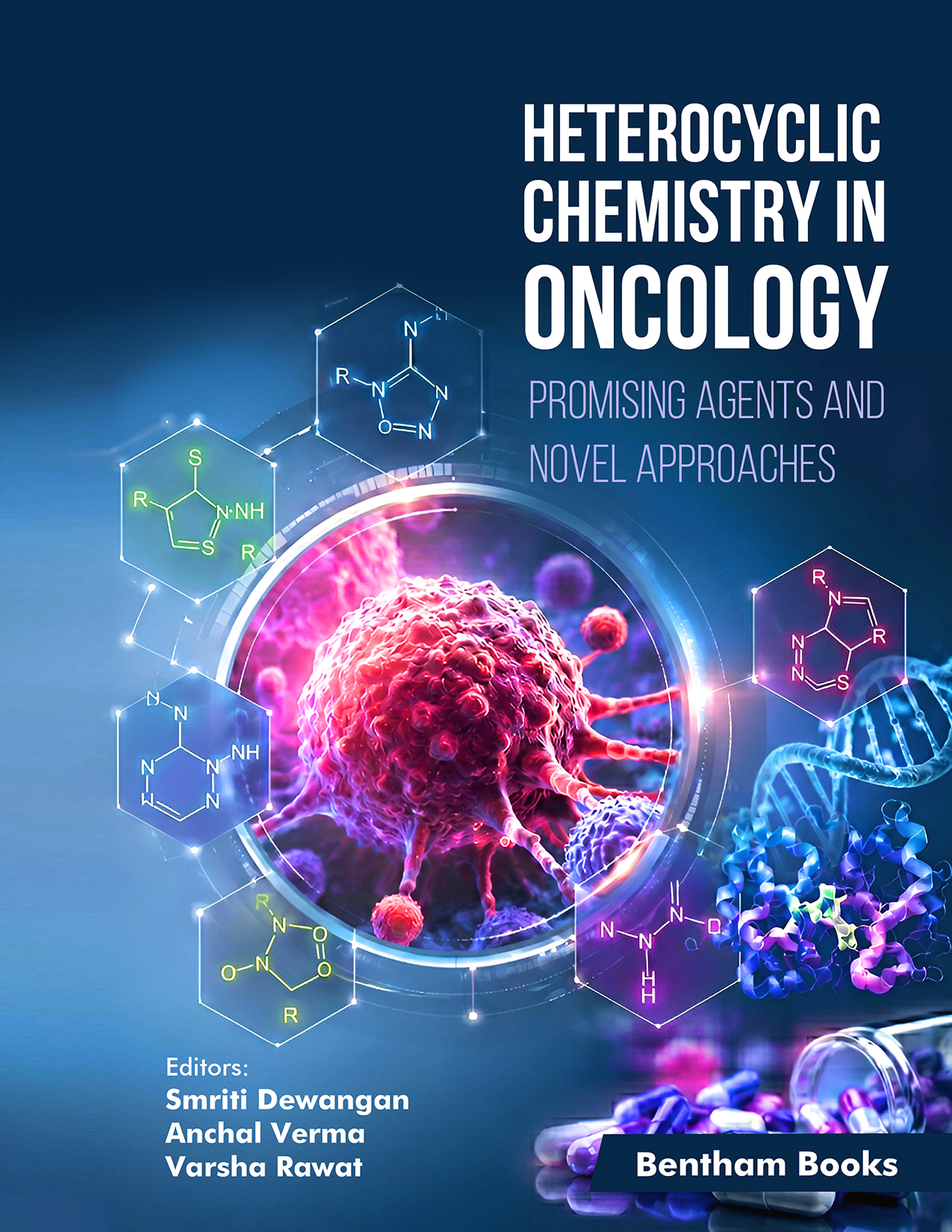
Heterocyclic Chemistry in Oncology: Promising Agents and Novel Approaches
sheds light on the critical role of heterocyclic compounds in contemporary cancer drug discovery and development.
As cancer continues to pose a major global health challenge, the book highlights how diverse heterocyclic scaffolds are acting as powerful tools in the search for safer, more effective, and targeted anticancer therapies. By integrating concepts from medicinal chemistry, molecular oncology, computational biology, and pharmaceutical sciences, the book presents a multidisciplinary perspective on the design and development of novel anticancer agents.
The book covers the fundamental principles of heterocyclic chemistry and cancer biology before examining key classes of bioactive heterocycles, including pyrimidines, imidazoles, triazoles, quinolines, indoles, pyrazoles, thiazoles, and fused heterocyclic systems. It discusses their synthesis, biological evaluation, structure–activity relationships, molecular targets, and mechanisms of action. The text further explores emerging areas such as molecular docking, artificial intelligence-assisted drug discovery, nanotechnology-enabled drug delivery systems, targeted therapies, and kinase inhibitors, providing insights into the technologies transforming modern oncology research.
Combining synthetic, biological, and translational perspectives, the book critically evaluates current advances, challenges, and future opportunities in the development of heterocycle-based anticancer therapeutics. It serves as an important resource for understanding both established drug candidates and next-generation approaches in cancer treatment.
Key Features
- -Detailed discussions on the role of major heterocyclic compounds and scaffolds in anticancer drug discovery and development.
- -Integrated perspectives combining synthetic chemistry, biological evaluation, and structure–activity relationship studies.
- -In-depth analysis of molecular targets, mechanisms of action, and targeted cancer therapies
- -Discussions on current challenges and future directions in translating heterocyclic compounds into clinical applications
Readership:
Medicinal chemists, pharmaceutical scientists, researchers, academic faculty, and postgraduate students in medicinal chemistry, pharmaceutical chemistry, drug discovery, and cancer research.