
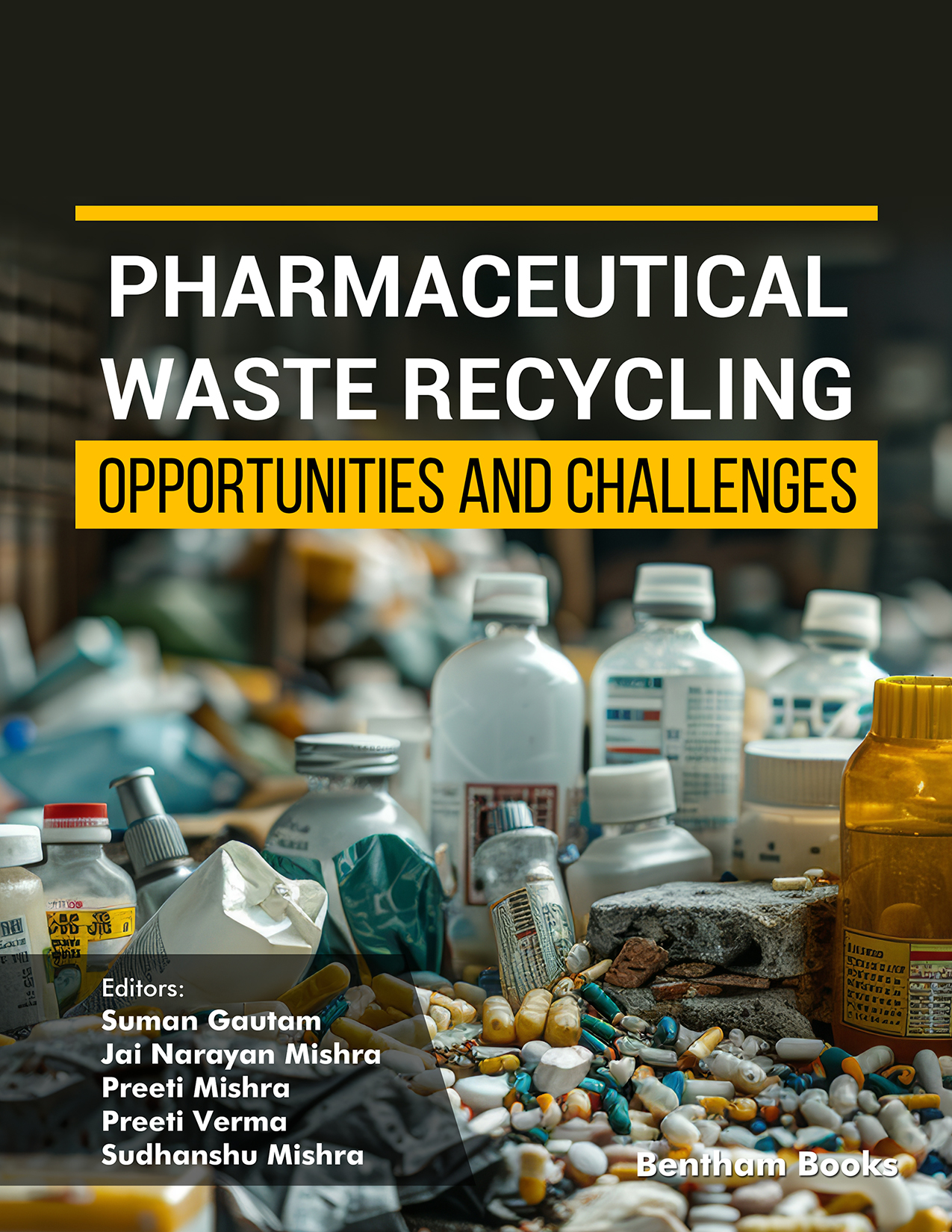
Pharmaceutical Waste Recycling: Opportunities and Challenges

Editors: Suman Gautam, Jai Narayan Mishra, Preeti Mishra, Preeti Verma, Sudhanshu Mishra

Pharmaceutical Waste Recycling: Opportunities and Challenges

ISBN: 979-8-89881-523-3
eISBN: 979-8-89881-522-6 (Online)

Introduction

Pharmaceutical Waste Recycling: Opportunities and Challenges provides a comprehensive overview of the growing global issue of pharmaceutical waste and its impact on environmental and public health. With increasing pharmaceutical consumption, improper disposal has become a major concern affecting ecosystems, water resources, and antimicrobial resistance.

The book covers sources and classification of pharmaceutical waste across healthcare systems, industries, households, and research settings. It further explores environmental pathways, toxicological risks, regulatory frameworks, and sustainable waste management strategies. Supported by case studies and real-world examples, the book highlights innovative solutions and practical approaches aligned with global sustainability goals.


Key Features

  • - Comprehensive coverage of pharmaceutical waste sources, classification, and impacts.
  • - Focus on environmental risks, including toxicity and antimicrobial resistance.
  • - Overview of regulatory frameworks and waste management practices.
  • - Practical strategies for sustainable disposal and recycling.
  • - Case studies highlighting real-world challenges and solutions.

Target Readership:

Students, researchers, and professionals in pharmacy, environmental science, and public health.

Foreword

The intersection of healthcare advancement and environmental sustainability poses a unique challenge: pharmaceutical waste. As the pharmaceutical industry expands to meet growing global needs, it also assumes a greater responsibility to mitigate environmental damage. The improper disposal of pharmaceutical products not only endangers ecosystems but also poses significant risks to human health, water sources, and biodiversity.

This book arrives at a pivotal time, providing critical perspectives on managing pharmaceutical waste through innovative and eco-conscious approaches. It thoughtfully explores topics ranging from classification and treatment processes to digital transformation, public awareness, and policy frameworks. What distinguishes this work is its multidisciplinary approach, which brings together the scientific, technological, and socio-political dimensions of waste management. Each chapter reflects the authors' academic rigor and commitment to real-world impact. Their work contributes meaningfully to ongoing efforts in making the pharmaceutical sector more responsible and sustainable.

I commend the editors and contributors for compiling this essential source of knowledge, and I am confident that readers will find in it both inspiration and practical guidance.

Raghav Mishra
Lloyd Institute of Management
and Technology,
Greater Noida, Uttar Pradesh,
India