
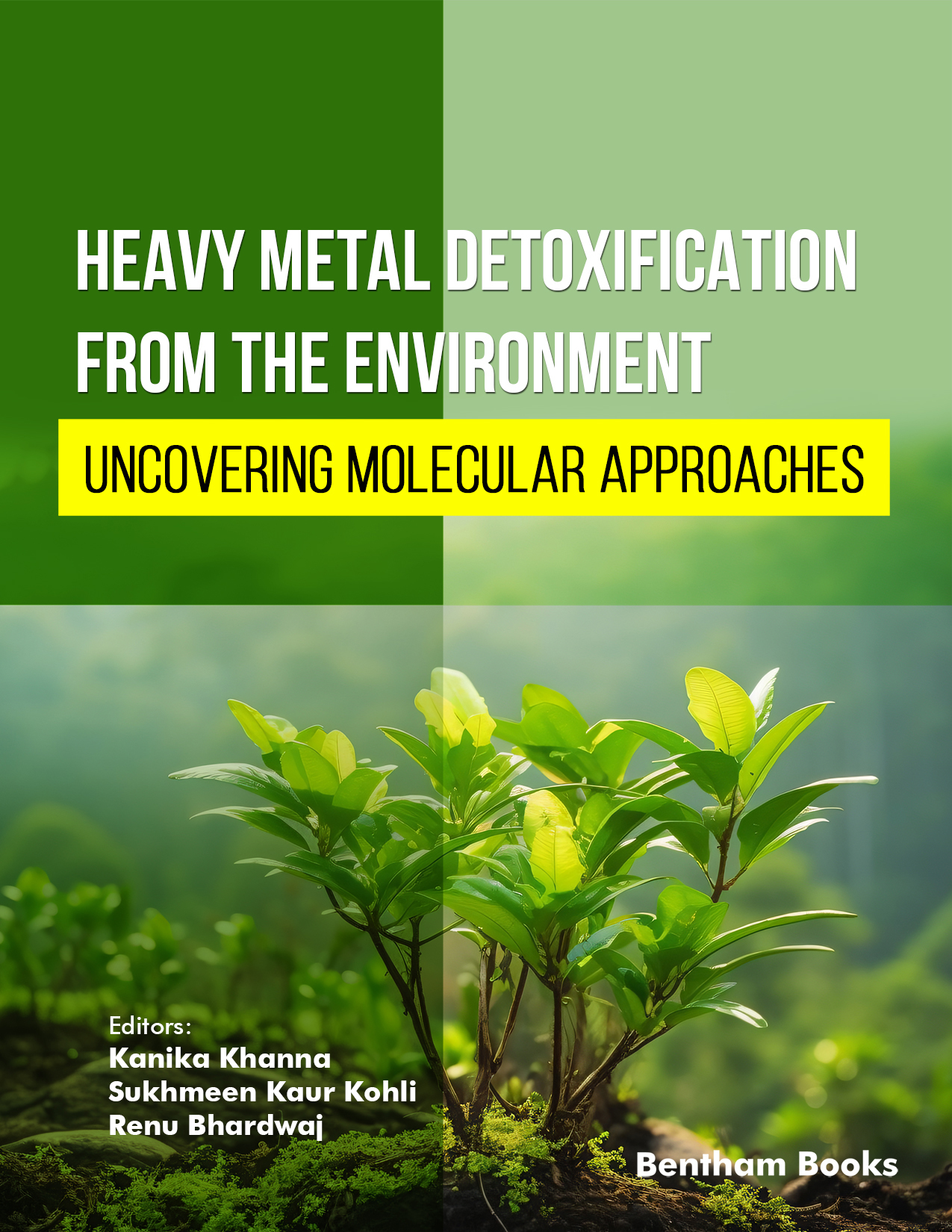
Editors: Kanika Khanna, Sukhmeen Kaur Kohli, Renu Bhardwaj

Heavy Metal Detoxification from the Environment: Uncovering Molecular Approaches

eBook: US $89 Special Offer (PDF + Printed Copy): US $152
Printed Copy: US $107
Library License: US $356
ISBN: 979-8-89881-118-1 (Print)
ISBN: 979-8-89881-117-4 (Online)
Year of Publication: 2025
DOI: 10.2174/97988988111741250101

Introduction

With industrialization continuing to raise heavy metal levels in soil, water, and food chains, Heavy Metal Detoxification from the Environment: Uncovering Molecular Approaches offers a comprehensive look at sustainable, eco-friendly strategies to mitigate heavy metal contamination.

With industrialization continuing to raise heavy metal levels in soil, water, and food chains, Heavy Metal Detoxification from the Environment: Uncovering Molecular Approaches offers a comprehensive look at sustainable, eco-friendly strategies to mitigate heavy metal contamination.

By integrating molecular biology, biotechnology, and environmental science, this volume offers researchers and practitioners a cutting-edge perspective on how genetic and functional characterization of detoxifying agents can transform heavy metal remediation into a greener, more effective practice.

Key Features:

  • - Examines molecular mechanisms underlying heavy metal detoxification
  • - Applies metagenomic and omics-based tools to analyze remediation pathways
  • - Employs eco-friendly bioremediation agents such as microbes, plants, and mycorrhizae
  • - Explores next-generation sequencing techniques for identifying key detoxification genes
  • - Bridges molecular biology with sustainable environmental management practices


Target Readership:

For researchers, academics, and graduate students in environmental science, biotechnology, and molecular biology, and industry professionals focused on sustainable remediation and pollution control.

Preface

Heavy metal remediation has gained much more attention in the past few years with the exploration of varied methods and detoxification approaches. They have acquired immense importance due to their hazardous effects on the environment. Heavy metals occur naturally in the environment, but their concentrations have been exponentially increased due to anthropogenic activities. They are continuously persisting in the environment in enormous quantities, thereby, entering the food chain through crops and consequent accumulation in the living cells via biomagnification. Novel remediation strategies have attained a specific position in the present era and also attracted interests of researchers through the implementation of bioremediation processes as well as various assistants to remediate the polluted soils. This in turn has become the talk of the town owing to its sustainable properties. The molecular insights provide excellent and new perspectives to unravel the heavy metal accumulation and detoxification. The metagenomic studies as well as screening strategies are used to extract the genomic information for detoxification mechanisms. Moreover, the development of next-generation sequencing studies has also provided us the unparalleled perspectives through key remediation mechanisms. This book mainly focuses on the impact of heavy metals in the environment, and their detoxification potential with special emphasis on the sustainable approaches, molecular patterns, omics approaches and metagenomics analysis. This book discusses the novel and new generation strategies for heavy metal detoxification and remediation by the use of eco-friendly methods such as microbes, plant hormones, earthworms, mycorrhizae, microalgae, probiotics etc. It further focuses on the function and characteristics of the remediating agents used for metal detoxification at molecular or genetic levels.

Kanika Khanna
Department of Microbiology, D.A.V University
Jalandhar, Punjab, India
Department of Botanical and Environmental Sciences
Guru Nanak Dev University, Amritsar
Punjab, India

Sukhmeen Kaur Kohli
School of Life Sciences, Central University Hyderabad
Hyderabad, Telangana, India
Deptartment of Botanical and Environmental Sciences
Guru Nanak Dev University, Amritsar
Punjab, India

&

Renu Bhardwaj
Department of Botanical and Environmental
Sciences, Guru Nanak Dev University, Amritsar
Punjab, India